Mahjong Match
- 4.9
- Rating
- 1.00M
- Installs
- Free
- Price

 Analysis by App-foxy
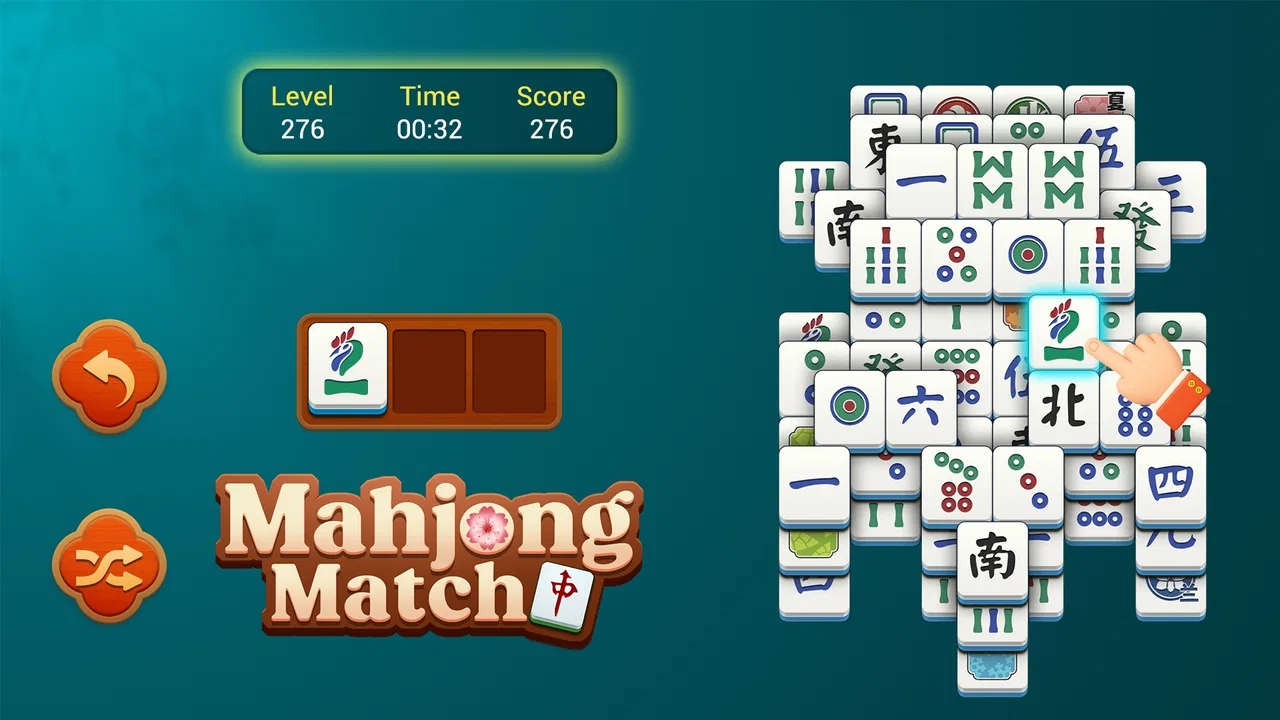
I approached Mahjong Match as the sort of board game I could open for a quiet break rather than a high-pressure gaming session. That first impression still feels accurate after spending time with it: the presentation is built around readable tiles, familiar matching rules, and a slower rhythm that makes each move easy to consider. It is a free game from Topy Games, aimed at Everyone, and it has already reached over a million installs with a 4.8 average from around 42 thousand ratings. Those figures suggest that its simple idea is connecting with a wide audience, but the more useful question is whether the experience remains pleasant after the novelty of the first few boards fades.
My answer is mostly yes, especially if you want a relaxing Mahjong-style puzzle that does not demand quick reactions. I found the clearest appeal in the way the game lowers visual and mental friction. The large tiles are easier to inspect than the small symbols used by many traditional mobile board games, and the overall format suits short sessions. At the same time, this is not the right pick for somebody looking for deep strategy, competitive play, or a constantly changing set of mechanics. Its strength is focused simplicity, and that strength also defines its limits.
How the first sessions establish a reason to keep playing
The early goal is immediately understandable: identify matching tiles and clear the board. That matters more than it may sound. A board game can lose me quickly when it starts with too many rules, unfamiliar icons, or a tutorial that interrupts the first enjoyable moment. Here, the central action is easy to grasp, so I can concentrate on scanning the layout and deciding which pair is safe to remove.
You May Also Like

 Blood Strike: 2.5 Anniversary
Blood Strike’s Loadouts Turn Every Drop Into a Tactical Gamble
A close look at Blood Strike’s custom loadouts: how fast access to signature weapons reshapes its battle royale rhythm, rewards preparation, and narrows the gap between fights.

 Pandora - Music & Podcasts
Pandora’s Music Is Easy to Start, but Harder to Recover
Pandora’s strength is its low-effort path from a seed to a station. Its weak spot is how much confidence it asks you to place in connection, setup, and quiet recovery.

 8 Ball Pool
 Is Built on Rivalries, Rematches, and Routine
A close look at the rivalries, rematches, shared routines, and unanswered safety questions that turn a quick pool match into a persistent mobile community.

 Samsung Music
’s Quiet Strength Is Playing What You Already Own
Its reach comes less from spectacle than from dependable access to a personal library. That simplicity is both the app’s strongest retention engine and its ceiling.

 AccuWeather: Weather Radar
AccuWeather Review: A Quick, Clear Forecast for Everyday Decisions
For everyday plans, the best forecast is the one you can understand quickly. AccuWeather makes rain timing, radar, and local conditions easy to act on, with a few trade-offs.

 Hill Climb Racing
Why Hill Climb Racing Still Turns Crashes Into One More Run
A tiny car, a bumpy hill and one more upgrade: Hill Climb Racing keeps resurfacing because its simple chaos makes every near-miss feel personal.
More From Our News Desk



For a new player, that creates a gentle sense of progress. Each successful match reduces the visual clutter, and the board gradually becomes easier to read as pieces disappear. I like that the reward is visible in the play area itself rather than depending entirely on a separate score screen. Even without a complicated progression system, clearing a difficult section of the board gives the session a natural beginning, middle, and conclusion.
This design is particularly suitable for somebody returning to games after a long break. A senior player, for example, can focus on recognizing symbols and matching them without having to remember several special abilities or time-sensitive commands. I can also imagine using it alongside a daily routine: a few boards with morning coffee, a quiet round while waiting for an appointment, or a short evening activity that feels more engaging than simply scrolling through a feed.
The early experience also shows what the game is not trying to be. It does not present itself as a story-driven adventure or a competitive board platform. There is no need to learn a fictional world before enjoying the basic puzzle. That makes the opening accessible, although players who need a strong narrative hook may find the simplicity too bare.
Readable tiles make decision-making less tiring
The large-tile approach is more than a cosmetic choice. In a matching game, the main task is repeated visual comparison, so cramped symbols can turn an otherwise calm puzzle into an eye-strain exercise. I found the larger presentation more forgiving when I paused to inspect the board from a normal phone distance. It also helps when I play without rushing, because I can compare possible pairs without leaning toward the screen.
There is a useful distinction between making a game easy to understand and making it easy to solve. The layout may be approachable, but a careless match can still leave an awkward board later. That gives the first rounds a small strategic lesson: do not always remove the first pair you notice. I get better results by checking whether a match exposes another tile or blocks access to a useful group. This is one of the more rewarding habits to develop, and it adds thought without turning the game into a technical puzzle.
My practical tip is to scan in layers. I first look for exposed pairs, then check which move changes the most of the visible board. If two matches seem equally safe, I choose the one that opens more space. This approach makes the game feel less random and gives the player a simple way to improve without needing a guide or a complicated strategy system.
Progress feels clearest when the board itself changes
The strongest progress signal is the board becoming less crowded. That is immediate, concrete, and easy to understand at any age. I do not need to study a long list of achievements to know whether I am moving forward in the current puzzle. A successful move produces a small but satisfying change, while a completed board provides a clear stopping point.
That kind of feedback is valuable for casual players who do not want a game to occupy their entire day. I can finish a session at a natural moment instead of feeling forced to continue because an ongoing campaign has left me halfway through a mission. It also makes the game suitable for shared use. If I hand the phone to a family member, the state of play is easy to explain: the remaining tiles show exactly what still needs attention.
The trade-off is that simple progress signals may not be enough for players who expect a large collection of unlocks, character upgrades, or long-term customization. Mahjong Match works best when the satisfaction of solving individual boards is the main reward. If you need a visible account-wide journey with many layers of development, a more elaborate puzzle title will probably hold your attention longer.
I would also avoid judging the game only by how quickly the first boards disappear. The real test is whether you enjoy the repeated process of looking, comparing, and planning. This is a game about small decisions accumulating into a clean board, not about dramatic transformations. Its pacing benefits people who appreciate gradual progress, while it may feel underpowered to anyone who needs constant new content to stay interested.
Difficulty, pacing, and the pressure to continue
I find the difficulty most enjoyable when I treat each board as a small planning exercise, not a test of speed. Before making an obvious match, I check whether it opens useful choices or leaves a harder-to-read remainder; that pause can make a short session feel more satisfying. The next question for a shared household is how to make room for different players’ habits without assuming the game provides separate profiles or family controls.
A calm curve is useful, but not universally exciting
The difficulty curve is best understood through the amount of attention each layout asks from me. Early play is welcoming because the matching objective is familiar and the tiles are easy to distinguish. As the board becomes more involved, the challenge comes from remembering available pairs, spotting blocked pieces, and avoiding a move that creates an inconvenient remainder. That is a sensible way to increase difficulty without adding unnecessary rules.
I appreciate this form of challenge because it remains connected to the core activity. The game does not need to surprise me with unrelated obstacles; it can make the same matching task more demanding simply by asking for better planning. When I slow down and inspect the arrangement, I feel that a successful clear came from my choices rather than from tapping quickly.
Still, the calm pacing has a boundary. Players who enjoy timed rounds, head-to-head competition, or severe penalties may find the experience too gentle. The game’s senior-friendly presentation signals that it values comfort and accessibility over adrenaline. That is a good design decision for its intended audience, but it means the title should not be compared with fast arcade puzzles as though they were competing for the same mood.
One useful way to play is to treat each board as a concentration exercise rather than a race. I keep my attention on the most constrained area of the layout and look for moves that create options. If I start tapping automatically, I make more mistakes and enjoy the process less. The game rewards a patient rhythm, so trying to force speed works against its best quality.
Where the retention loop works, and where it can weaken
The retention pressure here is relatively light. The reason to return is the availability of another board and the desire to solve it more cleanly or more confidently. I find that healthier than a design that constantly interrupts play with demands for attention. A person can pick it up, complete a short session, and put it down without feeling that the game has become another obligation.
That restraint is also the main retention risk. Without a strong long-term hook, some players may feel that the experience becomes familiar sooner than expected. The matching action is satisfying, but it does not automatically create the same attachment as a role-playing game with characters, or a competitive game with rankings and opponents. Whether the game lasts on your phone depends heavily on how much you enjoy repeating its central puzzle.
I would recommend using it as part of a varied routine rather than expecting it to be your only game. It fits well between more demanding activities, and its low-pressure structure makes it a good choice when I want to exercise attention without committing to a long session. If I were choosing one game for a long flight or an extended offline-style gaming period, I would want to know that its available boards and progression could support that specific use before relying on it as my sole entertainment.
Another practical consideration is screen comfort. The large tiles help, but comfort still depends on brightness, viewing distance, and how long a session lasts. I get the best experience when I use the game in short intervals and give my eyes a break between boards. That is not a criticism of this particular title so much as a reminder that a visually repetitive matching game can become tiring if played continuously.
Who should choose it over familiar alternatives?
Compared with traditional Mahjong solitaire apps that prioritize ornate tile sets or dense layouts, this game’s clearest advantage is approachability. I would choose it for a parent, grandparent, or casual player who values legibility and a relaxed pace more than visual decoration. The board remains the focus, and the large presentation reduces the effort needed to distinguish pieces.
Compared with general match-three games, it offers a quieter kind of decision-making. Match-three titles often rely on cascading effects, special pieces, and rapid board changes. Mahjong Match is better for someone who wants to inspect a position and make one deliberate choice at a time. On the other hand, a match-three game is likely the better alternative for players who need explosions, chain reactions, or more immediate sensory feedback.
Compared with competitive board games, this is a more private experience. There is no reason to prepare for another person’s turn or worry about a ranking while solving the board. That makes it useful for winding down, but not for social players who want conversation, rivalry, or a shared match. I would also steer strategy-focused players toward a title with deeper resource management if they want decisions that extend beyond tile selection.
The game is free, which makes trying it easy, and its Everyone rating broadens its suitability for family devices. It runs on Android versions from 6.0 onward, so it is not restricted to only the newest phones. The current release is 1.0.3.20251114, and Topy Games has positioned the experience around accessible board play rather than technical complexity. Those details make it a practical candidate for an older compatible device that is used mainly for simple games.
Small habits that improve the experience
I found three habits especially useful. First, I avoid clearing a pair merely because it is visible; I check what the move exposes. Second, I pause after every few matches instead of scanning the entire board in a rush. That reset helps me notice pairs that were hidden by the previous arrangement. Third, I stop after a completed board when I feel my attention slipping. Continuing while tired turns a relaxing puzzle into repetitive tapping.
These habits reveal an important trade-off. The game is accessible because the rules are straightforward, but the player still gets more from it by bringing patience and visual organization. That makes it a modest brain-training activity in the everyday sense: it encourages observation, memory of available options, and planning. I would not treat it as a substitute for a specialized cognitive program, but I do think the format can make a short mental break feel purposeful.
For a senior user, I would set up the phone so the screen is clean, the display is comfortably bright, and accidental taps are less likely. I would also suggest playing at a table rather than holding the device at an awkward angle. These simple adjustments make the large-tile design more useful and reduce the chance that a comfortable game becomes physically inconvenient.
My verdict on the progression and long-term fit
Mahjong Match succeeds because it understands the value of a clear first goal, visible board-level progress, and a difficulty curve that asks for attention without demanding speed. I enjoy it most when I want a quiet puzzle with readable pieces and a definite end to each session. The experience feels welcoming to older players and to anyone who finds many mobile games visually busy or mechanically overloaded.
Its progression verdict is more measured: the moment-to-moment puzzle has enough structure to encourage another board, but the long-term pull depends on your personal tolerance for repetition. I would not recommend it to somebody who needs elaborate unlocks, competitive pressure, or a dramatic sense of advancement. In those cases, a richer board game or a more feature-heavy puzzle alternative will be a better fit.
For everyone else, the free entry point makes it easy to test without much commitment. I would recommend it to a friend who wants a calm matching game for short breaks, particularly if large tiles and a gentle pace matter more than spectacle. The best way to approach it is not as an endless challenge machine, but as a focused daily puzzle: open it, study the layout, make deliberate matches, and stop when the board is clear.
After that, the decision is simple. If the quiet satisfaction of removing pairs keeps you interested, this is a polished and approachable choice in the board-game space. If you need stronger variety or a more demanding progression system, its simplicity will eventually feel limiting. For my own use, the biggest strength is the balance between visual accessibility and thoughtful pacing, and that is enough to make it worth keeping around for relaxed sessions.
FAQs for Mahjong Match
01What is Mahjong Match and how does it differ from classic Mahjong?
Mahjong Match is a modern twist on the traditional Mahjong game. While classic Mahjong involves matching tiles to clear the board, Mahjong Match introduces new elements such as power-ups, time limits, and competitive scoring. This game is designed for quick, engaging play sessions, making it ideal for both casual gamers and Mahjong enthusiasts.
02Is Mahjong Match free to play, and are there in-app purchases?
Yes, Mahjong Match is free to download and play on both Android and iOS platforms. However, it does offer in-app purchases. These purchases can enhance gameplay by providing additional power-ups, unlocking new levels, or removing ads, ensuring a more seamless and enriched gaming experience.
03What are the system requirements for Mahjong Match on mobile devices?
For Android users, Mahjong Match requires Android version 5.0 or higher. iOS users need iOS 10.0 or later. The game is optimized for performance, so it should run smoothly on most modern devices. Ensure you have enough storage space available, as updates and new levels may increase the app's size over time.
04Does Mahjong Match offer multiplayer or social features?
Yes, Mahjong Match includes social features that allow players to connect with friends. You can compete in leaderboards, share achievements, and invite friends to play. While there isn’t a direct multiplayer mode, these social elements add a competitive edge and a community feel to the game.
05How often does Mahjong Match receive updates and new content?
The developers of Mahjong Match are committed to keeping the game fresh with regular updates. These updates often include new levels, seasonal events, and bug fixes. Players can expect new content roughly every month, ensuring the game remains engaging and offers long-term playability.
Pros
- Engaging and challenging levels.
- Visually appealing graphics.
- Smooth and responsive gameplay.
- Regular updates and new content.
- Easy to learn for beginners.
Cons
- Contains in-app purchases.
- Ads can be intrusive.
- Limited offline functionality.
- Battery consumption is high.
- Requires a stable internet connection.

Mahjong Match
Gallery